


PayDay Deals - Highlights
-
 .SaleRegular price £9.91Regular priceUnit price per
£17.99Sale price £9.91Sale -
 .SaleRegular price £11.99Regular priceUnit price per
£15.99Sale price £11.99Sale -
Regular price £37.49Regular priceUnit price per
£46.99Sale price £37.49Sale -
 .SaleRegular price £13.49Regular priceUnit price per
£22.99Sale price £13.49Sale -
 .SaleRegular price £19.81Regular priceUnit price per
£25.99Sale price £19.81Sale -
Regular price £79.91Regular priceUnit price per
£82.99Sale price £79.91Sale -
 .SaleRegular price £37.49Regular priceUnit price per
£46.99Sale price £37.49Sale -
 .SaleRegular price £11.99Regular priceUnit price per
£15.99Sale price £11.99Sale -
Regular price £95.91Regular priceUnit price per
£115.99Sale price £95.91Sale -
Regular price £119.91Regular priceUnit price per


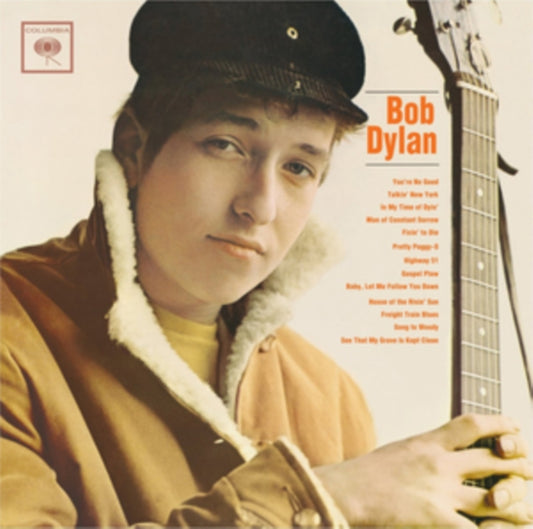


Top 100 Vinyl Castle Chart
-
 1.SaleRegular price £9.91Regular priceUnit price per
£17.99Sale price £9.91Sale -
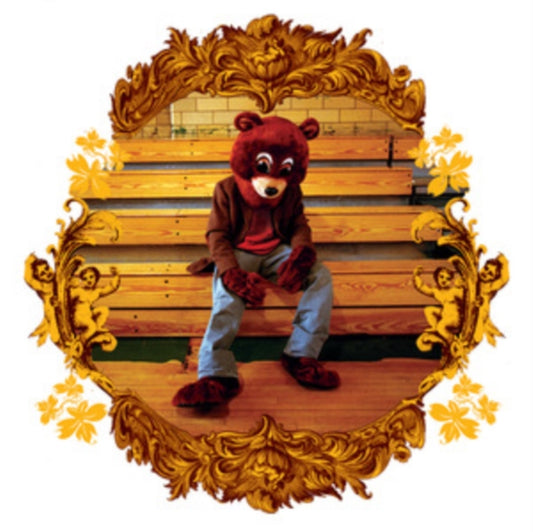 3.SaleRegular price £37.91Regular priceUnit price per
£42.99Sale price £37.91Sale -
Regular price £24.99Regular priceUnit price per
£24.99Sale price £24.99 -
Regular price £95.91Regular priceUnit price per
£115.99Sale price £95.91Sale -
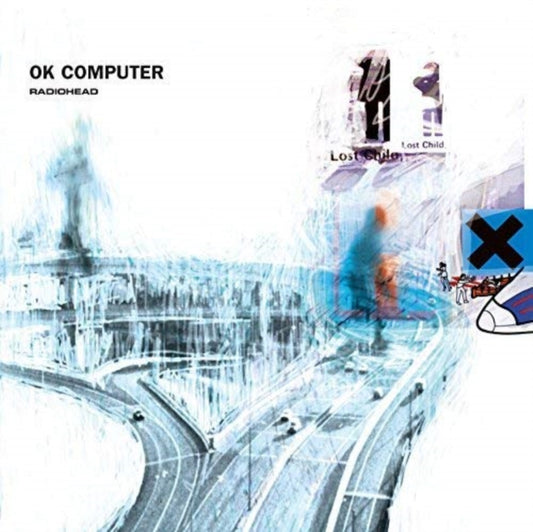 6.SaleRegular price £28.49Regular priceUnit price per
£33.99Sale price £28.49Sale



Latest Music News
View all-

Dave Grohl Explains Why Foo Fighters Moved On From Josh Freese
Dave Grohl clarifies decision to part ways with Josh Freese, giving fans a glimpse into the inner workings of Foo Fighters. The legendary frontman discusses the band's evolution and the...
Dave Grohl Explains Why Foo Fighters Moved On From Josh Freese
Dave Grohl clarifies decision to part ways with Josh Freese, giving fans a glimpse into the inner workings of Foo Fighters. The legendary frontman discusses the band's evolution and the challenges of keeping a group together for over two decades. In a recent interview, Grohl candidly reveals the reasons behind the departure of Freese, shedding light on the creative differences that led to the amicable split. "It's always tough when a member decides to move on," Grohl admits. "But at the end of the day, we have to do what's best for the music and for the band as a whole. Josh is an incredibly talented musician, and we wish him all the best in his future endeavours." Fans have been quick to speculate about the impact of Freese's departure on Foo Fighters' sound. Will the band's dynamic change without his drumming prowess? Grohl remains optimistic, emphasising the importance of embracing change and embracing new opportunities for growth. "Every member brings something unique to the table," Grohl explains. "While Josh's contributions were invaluable, we are excited to see how the band evolves with fresh perspectives and new energy." As Foo Fighters gear up for their next album release, Grohl's insights offer a glimpse into the band's creative process and the challenges of navigating the ever-changing landscape of the music industry. With a legacy spanning multiple generations, Foo Fighters continue to push the boundaries of rock and roll, cementing their status as one of the most influential bands of our time. So while the departure of Josh Freese may mark the end of an era for Foo Fighters, it also signals the beginning of a new chapter filled with endless possibilities. As Grohl himself puts it, "The music will always come first, no matter who's behind the kit." And with that, we eagerly await the next chapter in the Foo Fighters' storied career.
-

Bad Bunny Pays Tribute to Willie Colón at São Paulo Concert
Bad Bunny Honours Willie Colón at São Paulo Gig in a Spectacular Show of Latin Music Mastery In a whirlwind of electrifying energy and pulsating rhythms, Bad Bunny paid tribute...
Bad Bunny Pays Tribute to Willie Colón at São Paulo Concert
Bad Bunny Honours Willie Colón at São Paulo Gig in a Spectacular Show of Latin Music Mastery In a whirlwind of electrifying energy and pulsating rhythms, Bad Bunny paid tribute to the legendary Willie Colón at his recent concert in São Paulo, Brazil. The reggaeton superstar, known for his genre-defying sound and boundary-pushing lyrics, took the stage by storm as he dazzled fans with a mesmerising performance that showcased his deep appreciation for the iconic salsa musician. From the moment Bad Bunny stepped foot on stage, it was clear that this was no ordinary concert. The crowd erupted in cheers and applause as he launched into a powerful rendition of Colón's classic hits, infusing his own unique style and flair into each song. With his trademark swagger and infectious charisma, Bad Bunny captivated the audience, drawing them into a mesmerising musical journey that paid homage to one of the greats of Latin music. As the night went on, the energy in the venue reached fever pitch as Bad Bunny and his band delivered one show-stopping performance after another. From the pulsating beats of "El Gran Varón" to the soulful melodies of "Idilio", each song was a masterclass in musical excellence, showcasing Bad Bunny's incredible talent and versatility as an artist. But perhaps the most poignant moment of the night came when Bad Bunny invited a special guest on stage to join him in a heartfelt duet of Colón's timeless classic, "Pedro Navaja". As the two artists sang side by side, their voices blending in perfect harmony, it was clear that this was more than just a concert - it was a celebration of the enduring legacy of Willie Colón and the rich tapestry of Latin music. In a music industry often dominated by commercialism and trends, Bad Bunny's tribute to Willie Colón was a refreshing reminder of the power of music to transcend boundaries and connect people across cultures. With his raw talent, passion for his craft, and unwavering commitment to honouring the musical giants who came before him, Bad Bunny has solidified his status as a true legend in the making. As the final notes of the concert faded away and the crowd roared in appreciation, it was evident that Bad Bunny's performance in São Paulo would go down in history as one of the most unforgettable moments in Latin music. With his tribute to Willie Colón, he not only paid homage to a musical icon but also cemented his own legacy as an artist who continues to push the boundaries of creativity and innovation in an ever-evolving industry. In a world where music is constantly changing and evolving, Bad Bunny reminds us that sometimes the greatest songs are the ones that endure through the years, touching hearts and inspiring generations. As we reflect on this spectacular show of Latin music mastery, we can't help but be grateful for artists like Bad Bunny who continue to keep the spirit of great music alive and thriving.
-

Bruno Mars Unveils Full Tracklist for New Album ‘The Romantic’
In a move that has set hearts aflutter, Bruno Mars has revealed the complete tracklist for his highly anticipated new album, 'The Romantic'. The album, set for release on Valentine's...
Bruno Mars Unveils Full Tracklist for New Album ‘The Romantic’
In a move that has set hearts aflutter, Bruno Mars has revealed the complete tracklist for his highly anticipated new album, 'The Romantic'. The album, set for release on Valentine's Day next year, promises to be a sensual and soulful journey through the realms of love and romance. Mars, known for his smooth vocals and infectious grooves, has once again teamed up with longtime collaborator Mark Ronson for several tracks on the album. The pair's chemistry is undeniable, with hits like "Uptown Funk" and "24K Magic" cementing their status as a dynamic duo in the music industry. The tracklist for 'The Romantic' offers a tantalizing glimpse into Mars' creative vision for the album. With songs like "Love On The Dancefloor" and "Moonlit Serenade", it's clear that Mars is aiming to capture the essence of true love and passion in his music. Fans of Mars will no doubt be thrilled to see the return of some familiar faces on the album. Collaborations with artists like Anderson .Paak and H.E.R. are sure to add an extra layer of depth and emotion to the already impressive lineup of tracks. As we eagerly await the release of 'The Romantic', it's clear that Bruno Mars is once again set to take the music world by storm. With his signature blend of R&B, funk, and pop influences, Mars continues to push the boundaries of what we expect from modern music. So mark your calendars, music lovers, because Bruno Mars is back and better than ever. 'The Romantic' promises to be a standout album in Mars' discography, and we can't wait to experience the magic he has in store for us. Get ready to fall in love all over again with Bruno Mars and 'The Romantic'.


Latest Music Features
View all-

We Love Bowie: A Legacy of Innovation
In the history of popular culture, there are rock stars, there are icons, and then there is David Bowie. He was an alien who fell to earth, a folk singer,...
We Love Bowie: A Legacy of Innovation
In the history of popular culture, there are rock stars, there are icons, and then there is David Bowie. He was an alien who fell to earth, a folk singer, a glam rock deity, a plastic soul crooner, and an elder statesman of art rock. He was a kaleidoscope of characters, each one distinct yet unmistakably Bowie. When we lost him in 2016, the world felt a little less colourful, a little less strange, and certainly less magical. But while the man may be gone, the art he left behind continues to vibrate with an energy that feels as urgent today as it did decades ago. At Vinyl Castle, David Bowie is not just a section in our racks; he is a cornerstone of everything we love about music. Today, we celebrate the man who taught us that the only constant in life - and art - is change. The Man Who Sold the World (and Bought it Back) David Jones, born in Brixton in 1947, was never destined for an ordinary life. Rebranding himself as David Bowie to avoid confusion with the Monkees' singer, he spent the 1960s searching for a sound. He dabbled in mod rock, music hall, and folk, but it was his 1969 single "Space Oddity" that launched him into the stratosphere. Released just days before the Apollo 11 moon landing, it captured the public imagination perfectly. Yet, Bowie was never content to be a mere novelty act. His true breakthrough came with the realisation that he didn't just have to write songs; he could create entire worlds. With The Man Who Sold the World and Hunky Dory, he began to play with gender and genre, but it was 1972’s The Rise and Fall of Ziggy Stardust and the Spiders from Mars that changed everything. Ziggy Stardust wasn't just a character; he was a phenomenon. With his flame-red mullet, shaved eyebrows, and astral jumpsuit, Bowie became the ultimate outsider. He offered a sanctuary for the weird, the wonderful, and the marginalised. He looked at the camera on Top of the Pops, draped his arm around guitarist Mick Ronson, and signalled to every kid in a suburban living room that it was okay to be different. The Art of Reinvention Most artists are lucky to have one great era. Bowie had dozens. His greatest superpower was his refusal to stay still. Just as the world fell in love with Ziggy, he killed him off onstage at the Hammersmith Odeon in 1973. "This is not only the last show of the tour," he announced, "but it's the last show that we'll ever do." Fans wept, thinking Bowie was retiring. Instead, he was simply shedding a skin. He moved on to the dystopian Diamond Dogs, then pivoted sharply into the "plastic soul" of Young Americans. It was a daring move for a British white boy to tackle American R&B, but the result was the sleek, funky "Fame," his first US number one. Just as he conquered America, he fled to Europe. Burnt out and battling addiction, he settled in Berlin with Brian Eno and Iggy Pop. The resulting "Berlin Trilogy" - Low, "Heroes", and Lodger - remains one of the most creatively fertile periods in rock history. These albums were cold, electronic, and experimental, influencing everything from post-punk to techno. The title track of "Heroes", recorded in a studio overlooking the Berlin Wall, stands as one of the most powerful anthems of hope ever recorded. In the 80s, he reinvented himself again, this time as a blonde-haired, suit-wearing global superstar with Let's Dance. He filled stadiums, sold millions of records, and proved he could dominate the mainstream charts just as easily as the avant-garde underground. Fashion, Film, and Fluidity Bowie’s influence extended far beyond music. He was a fashion icon who treated his body as a canvas. He blurred the lines between masculine and feminine, human and alien. From the Kansai Yamamoto jumpsuits of the Ziggy era to the sharp tailoring of the Thin White Duke and the Union Jack coat designed by Alexander McQueen, Bowie understood the power of visual language. He made fashion dangerous, exciting, and intellectual. He also conquered the silver screen. His role as the alien Thomas Jerome Newton in The Man Who Fell to Earth was hauntingly perfect casting. He brought a fantastical menace to the Goblin King Jareth in Labyrinth, a role that introduced him to a generation of children (and gave us some unforgettable musical numbers). Whether playing Andy Warhol in Basquiat or Pontius Pilate in The Last Temptation of Christ, Bowie brought a unique gravity to every role. A Legacy That Echoes It is impossible to quantify Bowie’s influence because it is everywhere. You hear it in the synth-pop of the 80s, the grunge of the 90s, and the genre-bending pop of today. Without Bowie, there is no Madonna, no Lady Gaga, no Lorde, no Harry Styles. He created the template for the modern pop star: an artist who curates their image as carefully as their music. But perhaps his greatest lesson was his fearlessness. He was never afraid to fail. He released albums that confused critics and alienated fans, only for those same records to be hailed as masterpieces decades later. He followed his muse wherever it led, regardless of commercial consequence. Even his death was a final piece of art. His last album, Blackstar, released on his 69th birthday and just two days before he died, was a jazz-inflected meditation on mortality. The video for "Lazarus," featuring Bowie in a hospital bed, is a poignant, heartbreaking farewell from a man who knew he was saying goodbye. He turned his own passing into a creative statement, remaining in control of the narrative until the very end. We Can Be Heroes David Bowie showed us that life is a performance, and we are the directors. He taught us to embrace the strange, to question the norm, and to constantly seek out the new. He was a connector, bridging the gap between high art and pop culture, between the past and the future. His music is a treasure trove that rewards deep exploration. Whether you want the raw rock and roll of Aladdin Sane, the ambient soundscapes of Low, or the drum and bass experiments of Earthling, there is a Bowie album for every mood and every moment. So, today, let’s paint a lightning bolt on our faces, turn up the volume, and look to the stars. The Starman may have gone back to the sky, but his music is still blowing our minds.
-

The Voice of a Generation: Celebrating Kurt Cobain
In the logging town of Aberdeen, Washington, on February 20, 1967, a child was born who would grow up to dismantle the glitz of 80s rock and rebuild music in...
The Voice of a Generation: Celebrating Kurt Cobain
In the logging town of Aberdeen, Washington, on February 20, 1967, a child was born who would grow up to dismantle the glitz of 80s rock and rebuild music in his own image. Kurt Donald Cobain was not just a singer, a guitarist, or a songwriter. He was a lightning rod for a disenchanted generation, a reluctant icon who turned teenage angst into high art. At Vinyl Castle, we often talk about records that shifted the axis of the music world. Few artists have caused a shift as violent and permanent as Kurt Cobain. Today, on what would have been his 59th birthday, we celebrate the man, the music, and the indelible mark he left on our culture. The Quiet Storm from Aberdeen Kurt Cobain’s early life was a familiar story of American working-class struggle, divorce, and alienation. He found solace in art and music, drawing influence from the raw energy of punk rock and the heavy sludge of the local underground scene. Bands like The Melvins and Black Flag provided a blueprint: music didn't have to be polished; it just had to be true. It was this authenticity that became the cornerstone of Nirvana. When Cobain formed the band with bassist Krist Novoselic in 1987, they weren't trying to be rock stars. In fact, they were the antithesis of the hair-metal giants dominating MTV at the time. They were scruffy, loud, and seemingly indifferent to fame. Their debut album, Bleach (1989), recorded for a mere $600, was a raw, abrasive slab of noise-rock. It bubbled under the surface, gaining traction in the UK and the US underground. It was a warning shot, a hint of the melodic genius buried under the distortion. But nothing could prepare the world for what came next. Smells Like Teen Spirit: The Explosion In September 1991, Nirvana released Nevermind. The lead single, "Smells Like Teen Spirit," was unexpected, undeniable, and utterly revolutionary. It began with a clean, chimey four-chord riff that suddenly erupted into a wall of distortion. It was the "quiet-loud-quiet" dynamic that Cobain had borrowed from the Pixies, perfected and weaponised for the masses. The song’s video - a chaotic pep rally gone wrong - became the visual anthem of the 90s. Almost overnight, "alternative" music became mainstream. The polished, spandex-clad rock of the 80s was suddenly obsolete. Flannel shirts, ripped jeans, and second-hand cardigans became the uniform of youth culture. Cobain’s voice was the engine of this change. He could move from a fragile, mumbled whisper to a blood-curdling scream in a single breath. He sang about boredom, confusion, and pain with a vulnerability that resonated deeply with millions of young people who felt unheard. He wasn't preaching to them; he was screaming with them. The Reluctant Voice of a Generation The term "Voice of a Generation" was a label Cobain hated. He was deeply uncomfortable with the media circus and the scrutiny that came with Nirvana’s massive success. He saw himself as a punk rocker, an outsider who had accidentally crashed the party. Yet, despite his resistance, he used his platform to champion causes he believed in. He was a vocal feminist and an advocate for LGBTQ+ rights long before it was standard for mainstream rock stars. In the liner notes of the compilation album Incesticide, he famously wrote: "If any of you in any way hate homosexuals, people of different colour, or women, please do this one favour for us - leave us the hell alone! Don't come to our shows and don't buy our records." Musically, he continued to push boundaries. In Utero (1993), the band’s final studio album, was a deliberate step away from the polished production of Nevermind. It was abrasive, raw, and uncompromising. Tracks like "Heart-Shaped Box" and "All Apologies" showcased his maturing songwriting, blending visceral imagery with haunting melodies. MTV Unplugged: The Swan Song Perhaps the most poignant document of Cobain’s talent is the MTV Unplugged in New York performance, recorded in November 1993. Stripped of the feedback and the volume, Cobain’s songs were revealed in their purest form. Surrounded by lilies and candles, looking frail in a fuzzy cardigan, he led the band through a setlist that ignored their biggest hits in favour of obscure covers and deep cuts. His cover of David Bowie’s "The Man Who Sold the World" introduced a new generation to the Thin White Duke. But it was the closing number, a cover of the traditional folk song "Where Did You Sleep Last Night," that remains the defining moment. As the song reaches its climax, Cobain’s voice cracks and strains, his eyes opening wide for a brief second before the final note. It is a moment of pure, unfiltered emotion - a glimpse into the soul of an artist who gave everything he had to his music. A Legacy That Burns Bright Kurt Cobain died on April 5, 1994, at the age of 27. The tragedy of his loss is still felt deeply today. We are left wondering what he might have done next. Would he have explored acoustic folk? collaborated with Michael Stipe? moved into painting? However, the music he left behind is timeless. Nirvana’s influence can be heard in everything from modern emo rap to indie rock. Every time a kid picks up a cheap guitar and learns that "Teen Spirit" riff, the legacy continues. He proved that you don't need virtuoso skills or expensive gear to change the world; you just need three chords and the truth. So, on his birthday, let’s celebrate the art he gave us. Let’s turn up the volume on "Lithium," let’s sing along to "Come As You Are," and let’s remember the boy from Aberdeen who made it okay to be yourself.
-

The First Spark: Jimi Hendrix's Humble Debut
Every legend has an origin story, a single moment where potential first meets performance. For James Marshall Hendrix, the man who would redefine the electric guitar and become a psychedelic...
The First Spark: Jimi Hendrix's Humble Debut
Every legend has an origin story, a single moment where potential first meets performance. For James Marshall Hendrix, the man who would redefine the electric guitar and become a psychedelic icon, that moment arrived on February 20, 1959. It wasn't at Monterey, Woodstock, or the Isle of Wight. It was in the basement of a synagogue in his hometown of Seattle. At just 16 years old, armed with his first electric guitar, the young man then known as Jimmy Hendrix played his very first public gig. There were no flaming guitars, no behind-the-back solos, and no cosmic feedback. It was a humble, almost anonymous beginning for a career that would burn brighter than any other. Today, we peel back the layers of myth to celebrate the first spark of a revolutionary fire. From Broomsticks to a Supro Ozark Before he ever held a real guitar, Hendrix’s musical journey began with a broomstick. He would carry it everywhere, mimicking the motions of the bluesmen he idolised, his imagination filling in the sounds. After pestering his father, Al, he finally acquired a five-dollar acoustic guitar, but it was a right-handed model. As a natural left-hander, Jimi simply flipped it over and restrung it, a practice he would maintain for the rest of his life. The real turning point came in mid-1958 when Al bought him his first electric guitar: a white Supro Ozark 1560S. This was the instrument that unlocked his true potential. Suddenly, the sounds he heard in his head - the raw power of blues artists like Muddy Waters and B.B. King, mixed with the showmanship of early rock and rollers - could be made real. He practised obsessively, his fingers exploring every inch of the fretboard, his ears absorbing every nuance of the records he loved. The Temple De Hirsch Gig By early 1959, the teenage Hendrix had joined his first proper band, the Velvetones. They were a local instrumental group, playing covers of popular rock and roll and R&B hits of the day. Their first gig was booked for a Friday night social event in the basement of Seattle’s Temple De Hirsch Sinai, a Reform synagogue. It's a setting so far removed from the Hendrix legend that it feels almost surreal. Accounts of the night are scarce, a footnote in a life filled with headline moments. The band played a short set, likely featuring tunes by artists like Duane Eddy or The Ventures. Hendrix, still shy and finding his footing, was not yet the flamboyant showman he would become. Reports suggest that his playing, while competent, was perhaps a little too wild for the bandleader. His flair for improvisation and adding his own embellishments, which would later become his trademark, apparently got him fired from the band after that single performance. It's a classic tale: an artist too far ahead of his time, constrained by the expectations of others. That night in the synagogue basement, the world wasn’t quite ready for Jimi Hendrix. But the experience lit a fuse. He had tasted the thrill of live performance, felt the energy of an audience, and understood the power of an amplified guitar. There was no going back. The Long Road to Experience The years between that first gig and his explosive arrival in London in 1966 were Hendrix’s apprenticeship. This was his "Chitlin' Circuit" era, a gruelling but essential period of development. Leaving Seattle, he enlisted in the army and, after being discharged, hit the road as a touring guitarist for a host of R&B and soul acts. Playing behind artists like Little Richard, Ike & Tina Turner, Sam Cooke, and The Isley Brothers, he learned invaluable lessons. He learned about stagecraft, discipline, and how to work a crowd. He learned how to be a supporting player, locking into a groove and serving the song. But all the while, he was absorbing, experimenting, and developing his own unique style in the shadows. He was often fired from these bands, too. His playing was too loud, his stage presence too distracting. He couldn't help but stand out. The sounds he was creating - a volatile cocktail of blues, rock, soul, and science fiction - were too revolutionary to be confined to the background. He was a lead guitarist in a sideman’s world, waiting for his moment to step into the spotlight. The Birth of a Legend That moment finally came when Chas Chandler, bassist for The Animals, saw him playing in a New York club in 1966. Chandler immediately recognised the untamed genius he was witnessing. He convinced Hendrix to move to London, the epicentre of the swinging sixties music scene, and helped him form the Jimi Hendrix Experience with Noel Redding on bass and Mitch Mitchell on drums. The rest, as they say, is history. Hendrix landed in London like an alien from a more advanced civilisation. His virtuosic playing, his use of feedback and distortion as musical tools, and his electrifying stage presence left the British rock elite - including Eric Clapton, Jeff Beck, and Pete Townshend - utterly speechless. Within months, he was a superstar. The Echo of a First Chord Looking back at February 20, 1959, we see more than just a teenager's first gig. We see the genesis of a revolution. It’s a powerful reminder that every monumental journey begins with a single, uncertain step. Before he could "kiss the sky," he had to plug in his guitar in a synagogue basement. Before he could ask "Are You Experienced?," he had to experience the sting of being fired for being too creative. That first performance was the quiet planting of a seed that would grow into a psychedelic forest of sound, influencing generations of musicians and changing the very language of the electric guitar. It's a testament to the power of perseverance and the importance of staying true to one's unique artistic vision, even when nobody else understands it yet. Let's honour that first spark. Pull out a copy of Are You Experienced, drop the needle, and listen to the sound of a young man who went from a Seattle basement to the pinnacle of the music world.


